Antalya, Türkiye | 22 November 2026
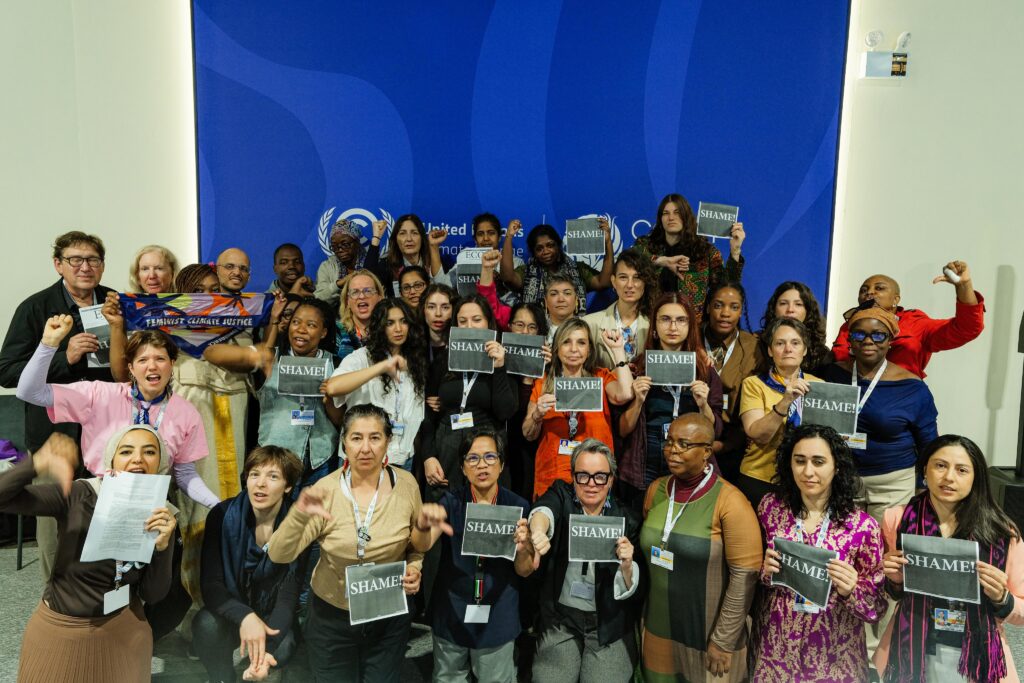
Earlier today as the COP31 Presidency released the final draft of the “Antalya Pact”, the Women and Gender Constituency called on Parties to reject the text – an outcome that represented “an abysmal failure of ambition, accountability and political leadership.”
However, the failure to adopt an outcome here at COP31 is not a victory for climate justice. It is yet another failure to deliver for people and the planet at the most urgent moment of the climate crisis. The deadlock over language on phasing out fossil fuels cannot be separated from the scarcity politics of these talks, created by decades of broken promises from developed countries to meet their moral and legal obligations to mitigate climate change and finance adaptation, loss and damage and a just transition. This process is being actively undermined by governments who continue to evade accountability for their failed commitments, who continue to instead bargain over fundamental human rights as though these were concessions to be traded away, and who reduce the survival of millions to the lowest common denominator.
COP31 was held at a stark moment where the urgency of the climate crisis could not be clearer. Participants were primed to reflect on what it means to enter overshoot, as the planet is now set to exceed the 1.5 degree temperature goal held as the line between possibilities and limitations to adapt to climate change, especially for the Pacific communities the Australian COP Presidency claimed to work on behalf of. Delegates were well-versed in the gap between what is needed and what is actually delivered with the latest Adaptation Gap Report and 7th Biennial Assessment of Climate Finance Flows. And the world was watching in the wake of the devastating loss and damage in Nepal, a tragic demonstration of what happens when protecting lives is apparently not worth changing this endless, climate-chaos-creating system of extractive capitalism, militarization, imperialism, and patriarchy.
“The cover decision became a shortcut for presidencies to advance their own interests while further undermining an already fragile process. At COP31, the Presidencies were noticeably absent from almost every negotiating track, appearing to prioritise a single cover decision over meaningful engagement across the negotiations. The result was decisions deepening the climate crisis and entrenching existing inequalities. But the injustice did not end there. Extending COP by two additional days is itself an act of procedural exclusion. Governments, civil society organisations and other Global South stakeholders do not have unlimited financial resources to extend accommodation, travel and participation. A process that prolongs negotiations at the expense of those with the least resources is neither inclusive nor equitable. COP must stop normalising last-minute extensions that effectively price the Global South out of the negotiations.” Mwanahamisi Singano – WEDO Director of Policy, WGC co-focal point
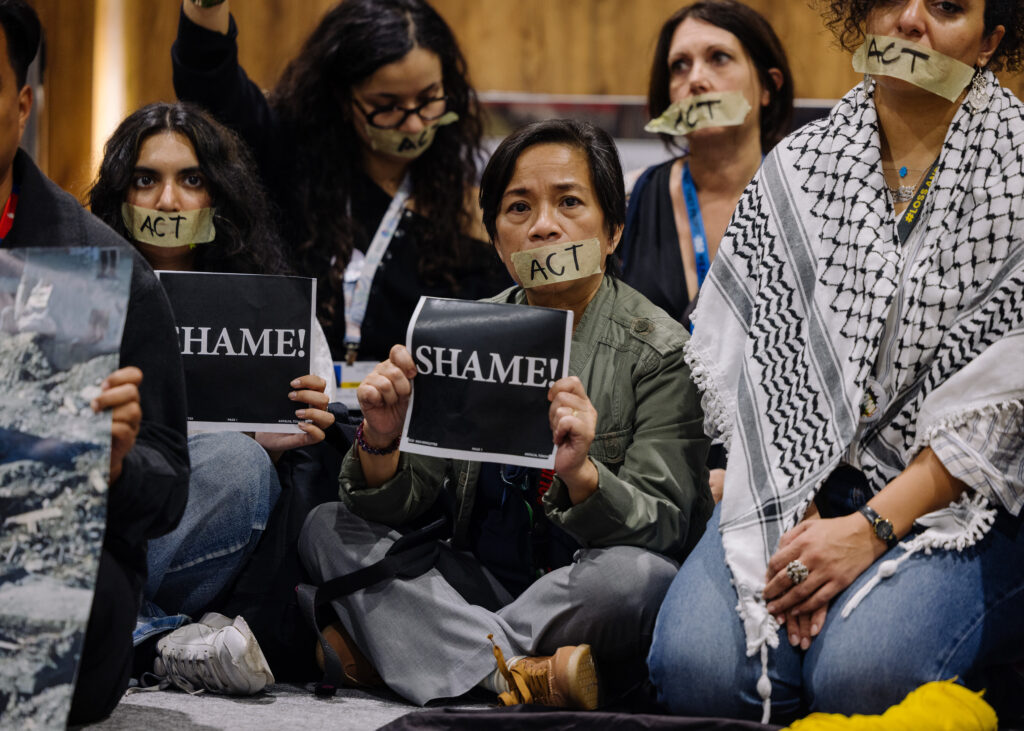
But the failures of COP31 extend beyond the negotiating text. With two COP Presidencies, there was an opportunity for greater leadership and accountability. Instead, negotiations unfolded amid restrictions on civil society space, the criminalization of LGBTIQ+ organizing and continued attacks on gender equality and human rights. These are not separate from the outcomes of climate negotiations. A process that silences people and undermines their rights cannot credibly claim to deliver climate justice.
“Instead of doubling ambition with two COP Presidencies, COP31 seemed to be ill-fated from the beginning. A COP hosted by a state that criminalises LGBTIQ+ organising and advocacy just eight weeks before the start of an UN conference cannot be inclusive by default — this is reflected in the outcome. There is no climate justice without gender equality and human rights.”, Pat Bohland, LIFE e.V., WGC co-focal point
The failure to adopt the Antalya Pact cannot be the only measure of what happened at COP31. Across the negotiations, we witnessed deliberate obstruction, evasion of responsibility, and the continued erosion of rights. But we also witness extraordinary determination and commitment from people and movements – alongside many willing governments outside of their negotiating blocs – working to defend rights, advance and demonstrate solutions, and fundamentally tell the truth of what is failing in this process.
What is missing is not solutions, knowledge or collective determination, but the political will to act and the accountability to deliver. As we leave Antalya, we take stock of what was achieved, what was blocked and what must come next.
COP31: Topline Assessment of the Talks
Gender
COP31 marked the first year of implementation of the historic Belém Gender Action Plan, adopted after years of feminist organizing and negotiations. The COP was expected to consider initial and annual reports, recognize initial efforts and support the implementation of commitments already agreed, What should have been a largely procedural discussion become another battleground over gender equality and previously agreed language.
Parties attempted to reopen agreements reached in Belém, challenge established terminology and even change the titles of already published reports. An 11-paragraph draft decision was reduced to five paragraphs of procedural conclusions. And these attacks were not confined to the gender negotiations. Across COP31, we witnessed coordinated efforts to weaken language on gender equality and human rights, forcing advocates and supportive governments to repeatedly defend longstanding commitments rather than advance their implementation.
Gender equality and human rights are not negotiating concessions. They are fundamental obligations, and the lives and lived realities of women and girls in all their diversity cannot be endlessly reopened for debate. The Belém Gender Action Plan has been adopted and the WGC came to COP demanding implementation and action now – and we are already delivering.
“The GAP was adopted. And that’s final. But it was sad to see that the 1st anniversary of the Belem GAP was met with blockages and lack of consensus from parties. I came to this COP31 with huge aspirations and enthusiasm thinking that the 1st GAP anniversary will record huge interest from all parties on best practices for implementation and translation of the GAP into reality. Therefore as COP31 concludes, marking the first year of the 2026–2034 Belém GAP, governments must move beyond procedural reporting and support the translation of the plan into funded, community-led initiatives that reflect the unpaid care work and daily realities of grassroots women and girls” – Zoneziwoh Mbondgulo-Wondieh, Women for a Change & Member of the WGC FC
“The story of the Belém Gender Action Plan at COP31 is not the handful of Parties trying to negotiate away our rights. It is the extraordinary number of countries, advocates and movements who came here not simply demanding implementation, but with concrete plans to make it happen. It is the countries organizing to deliver national assessments by March 2027. It is Pacific Island countries coming together around their own Pacific Gender and Climate Pact. It is the governments who sought us out to discuss how to nationalize the GAP and turn its commitments into action. Parties can try to chip away at our rights, but they will not stop this movement. We did not fight for the Belém Gender Action Plan simply to see words adopted on paper. We fought for it because of what it must change in people’s lives. The true measure of its success will not be found in the negotiating rooms, but in the lived realities of women and girls in all their diversity, in their communities, and in the futures we are fighting for.” – Claudia Rubio, Coordinator, WEDO, Co-lead WGC Gender
Adaptation
At COP31, developed countries once again advanced procedural outcomes on adaptation while evading their historical and legal responsibilities to finance adaptation in the Global South. While technical task forces and roadmaps moved forward, decisions on National Adaptation Plans were deferred, and language on gender equality and human rights was weakened. Crucially, commitments to triple adaptation finance were reduced to vague references in the proposed cover decision, without a concrete delivery plan backed by public, grant-based finance. With the Adaptation Fund mobilizing just $50.2 million, a fraction of what frontline communities urgently need, COP31 exposed yet another profound failure to deliver adaptation justice.
“After 31 years of climate summits, COP31 has once again shown that wealthy nations and those who benefit from lack of progress continue to trap everyone into endless negotiations. Frontline communities living through accelerating climate devastation cannot survive on legal technicalities, delayed plans, and diluted gender and human rights commitments. When a flagship mechanism like the Adaptation Fund walks away with barely $50.2 million while adaptation needs run into billions, we can’t speak of a technical shortfall anymore but a sheer lack of political will and profound failure of climate justice. Until developed countries deliver grant-based, public finance at the scale needed, the rhetoric of moving from negotiation to implementation will remain empty words for the people paying the highest price for a crisis they did not create.” – Demet Intepe, Senior Climate Resilience Advisor, Practical Action
Finance
We came to Antalya expecting developed countries to show at least some good faith efforts to deliver on their existing obligations to provide public finance, especially under Article 9.1 of the Paris Agreement and as reaffirmed in the ICJ’s Advisory Opinion. These obligations should have led to negotiating a clear baseline and pathway for tripling adaptation finance, as well as agreeing to launch a substantive climate finance work programme to develop an action plan focused how this imperative provision of climate finance would be delivered in coming years. These steps were imperative to rebuild trust in a multilateral process severely shaken by recent cuts to ODA and climate finance, and where tensions over provision arose in the intersessional negotiations in Bonn and the subsequent Green Climate Fund board meeting in Dushanbe.
Instead of real progress and adequate new pledges, developed countries delivered platitudes while retreating from UNFCCC principles, thereby abdicating their moral and historical responsibility to support the implementation of climate action in the Global South. The tripling of adaptation finance remains without a baseline or a commitment these funds will be provided directly by developed countries; the climate finance work programme is launched as likely another talkshop with no concrete outcomes; the Adaptation Fund is shamefully underfunded with pledges at only $50 million, which will support only 2% of the existing pipeline of projects.
“At a time of increasingly catastrophic climate impacts that devastate lives and livelihoods in countries already highly indebted, what is needed is scaled up, grant-based finance delivered predictably for mitigation, adaptation, and to address loss and damage. Making funds directly accessible for local communities, women’s groups, and Indigenous Peoples is also long overdue. The push for more loans, touting empty private sector leverage promises, and asking carbon market revenues to replace public provision are a deeply cynical and morally corrupt response by developed countries in breach of their legal obligation under the UNFCCC and Paris Agreement.” – Liane Schalatek, Heinrich Böll Foundation Washington, and Tara Daniels, WEDO, Co-leads WGC Finance
Just Transition
Feminists arrived at COP31 expecting Parties to deliver on their mandate to establish the Belém Antalya Mechanism for a just transition (BAM). Instead, due to an outrageous failure of political leadership by the joint presidencies, and blocking of progress from the EU, Norway, the UK, Japan and others, we leave not just with nothing, but having rolled back progress. Feminists condemn removal of language around protecting human rights in critical minerals value chains. The transition cannot happen at the expense of human rights, labour rights and communities. For global North parties to arrive with red lines around delivering the commitments they agreed to last year is an appalling destruction of faith in the COP process and in multilateralism.
“Feminists built this BAM, and we will not see it lost now. Along with our allies in the other rightsholder constituencies, we now have to digest, regroup, and let our communities at home know what has happened here. But one thing is already certain: we will come back stronger in 2027, ready to hold Parties accountable to their commitments. We look forward to COP32 establishing the Belem-Addis Ababa Mechanism!” –Sinéad Magner, Coordinator, Policy and Programs, WEDO, WGC Just Transition, co-focal point
Global Stocktake
The second Global Stocktake has been launched, but without a clear understanding of what it should evaluate. Two years after Dubai, Parties struggled even to reaffirm the goal of limiting warming to 1.5°C, acknowledge the risks of overshooting that threshold, and uphold the commitment to transition away from fossil fuels agreed in paragraph 28 of the first Global Stocktake. Governments must treat that commitment as the floor, not the ceiling, and ensure the second Global Stocktake measures progress not only in emissions reductions, but in its impacts on people. This requires data disaggregated by gender, age and disability, public climate finance that reaches women-led organizations directly, and meaningful participation in decision-making.
“Every fraction of a degree of warming comes at a human cost, borne disproportionately by communities in vulnerable situations, including women and girls in all their diversity and gender-diverse people.” Floridea Di Ciommo, GST co-lead, WGC
“Instead of delivering the financial and technical support and the participatory, gender-transformative framework needed for a fair Global Stocktake, industrialized countries at COP31, backed by fossil fuel lobbyists, have once again promoted costly and risky technologies such as carbon capture and storage, carbon dioxide removal and nuclear power. This is a fundamental failure of leadership, and the climate negotiations urgently need governance reform.” – Anne Barre, Women Engage for a Common Future, Co-Lead of the WGC’s Global Stocktake Thematic Group
Technology
Despite the launch of the Belém Technology Implementation Programme, COP31 failed to secure the financial support necessary for effective climate technology development and transfer. While Parties approved the Memorandum of Understanding for the new host of the Climate Technology Centre and Network, significant funding gaps remain, threatening its continued operations and the delivery of urgently needed climate technologies. Crucially, the outcome fails to ensure that marginalized communities on the frontlines of the climate crisis can access, shape and take ownership of these technologies.
“We cannot talk about implementing climate solutions while leaving the very institutions meant to deliver them without the resources to function. The Climate Technology Centre and Network needs sustained funding, and frontline communities must be able to access and take ownership of the technologies they need. Technology transfer cannot remain a promise on paper while those most affected by the climate crisis are left behind.” – Valeria Peláez Cardona, Women Engage for a Common Future (WECF), co-lead of WGC Tech group
Agriculture
COP31 once again failed to deliver meaningful progress on agriculture and food security, with negotiations under the Sharm el-Sheikh Joint Work on Implementation of Climate Action on Agriculture and Food Security deferred to the next sessions of the subsidiary bodies. This continued deadlock reflects the deeply contested nature of agriculture in climate negotiations, where powerful agribusiness interests continue to influence the agenda at the expense of sustainable and equitable food systems. Alarmingly, the draft cover decision failed to include references to food, farming or agroecology, despite their central importance to climate action, food security and community resilience.
Action for Climate Empowerment (ACE)
COP31 failed to adopt the Action for Climate Empowerment Action Plan for 2027–2031, following prolonged negotiations marked by attempts to weaken previously agreed language on gender equality, human rights and intersectionality. Despite more than 16 hours of negotiations and over 200 brackets in the negotiating text, the latest Presidency proposal retained important references to women and girls in all their diversity, gender-responsive implementation and the Belém Gender Action Plan. However, provisions on gender-, age- and disability-disaggregated data and the recognition of human rights defenders remained contested. The failure to adopt the Action Plan undermines efforts to advance inclusive climate education, public participation and access to information, and to ensure safe and meaningful participation for women environmental and human rights defenders.
“Action for Climate Empowerment should be about ensuring everyone has the education, information and opportunities to participate meaningfully in climate action. Instead, we spent hours defending language on gender equality and human rights that governments have already agreed to. While we welcome the recognition of women and girls in all their diversity and links to the Belém Gender Action Plan, it is unacceptable that disaggregated data and the rights of environmental and human rights defenders remain contested. What is not counted is not seen, and those who defend our planet must be able to participate safely. Governments must stop negotiating away rights and deliver an Action Plan that makes climate participation a reality for all.” – Floridea Di Ciommo, cambiaMO, Co-Lead of WGC, ACE Thematic Group
Loss & Damage
In the wake of the devastating climate disaster in Nepal, COP31 failed to deliver meaningful progress on loss and damage. Despite sustained pressure from developing countries demanding that developed countries move beyond expressions of solidarity to deliver concrete financial support, loss and damage was denied a dedicated negotiating agenda item and instead folded into discussions on adaptation. No new finance was pledged, with wealthy countries largely repackaging previous commitments rather than providing additional resources for recovery and reconstruction. Once again, countries and communities bearing the devastating consequences of a crisis they did not create were left without the support they urgently need.
“It is utterly shameful that in the aftermath of the devastation in Nepal, loss and damage was once again swept under the rug at COP31. Developing countries fought hard to demand more than expressions of solidarity from wealthy nations. Yet we leave Antalya with no new finance, only grand announcements recycling old, inadequate pledges. You cannot rebuild lives, homes and communities with recycled promises. Developed countries must stop evading their responsibility and pay their climate debt.” – Tetet Nera-Lauron, WGC Representative on the Santiago Network Advisory Board
Article 6/False Solutions
“Instead of committing to real emissions reductions, COP31 has become a platform for promoting false solutions and dangerous distractions. Governments are pushing carbon capture and removal technologies at a massive scale, while promoting international carbon markets as a source of investment. Carbon markets are not climate finance! And while these false solutions are being championed, Global North countries are threatening the future of non-market approaches under Article 6.8. We cannot allow speculative technologies and carbon markets to become an excuse for continued fossil fuel expansion and the failure to deliver real climate finance. This is shameful!” – Hwei Mian Lim, Co-Lead of WGC’s Article 6 Working Group
Peace and Demilitarisation
The failure of COP31 comes amid a global arms race. Governments spent a record US$2.887 trillion on their militaries in 2025, driving up emissions and diverting public funds from climate action. New pledges to the Adaptation Fund at COP31 totalled just US$50.2 million, less than half the cost of a single F-35B fighter jet. When governments underfund adaptation, women and girls shoulder more unpaid care and recovery work. Feminist, peace and climate justice movements united to demand action, yet the climate impacts of militarism stayed off the formal agenda. Several major military spenders reported emissions from military fuel use as “not occurring », despite operating fossil-fuel-powered vehicles, ships and aircraft. Redirecting just 5% of Annex II countries’ military spending could release US$76 billion annually, enough to bring electricity to every household in 40 sub-Saharan African countries by 2030 and leave US$26 billion a year for other climate priorities. Ahead of COP32 in Addis Ababa, we call for an open UNFCCC dialogue within a year on transparent reporting, cuts to military emissions and redirecting military spending towards climate finance that reaches frontline communities and supports their priorities. The nuclear lobby’s push at COP31 showed whose interests get a platform. Nuclear power’s links to nuclear weapons tie it to militarism, while the harms of uranium mining and radioactive waste fall disproportionately on Indigenous Peoples and frontline communities. Nuclear power cannot be part of a feminist just transition.
WGC Member Outcome Quotes
“COP31 exposes the profound failure of political leadership in a process where wealthy countries continue to evade their responsibilities while the interests of polluting industries take precedence over people’s lives. We cannot keep mistaking diplomatic compromise for progress when it comes at the expense of people’s rights and lives. Feminist movements are not here to manage the decline of multilateralism. We are here to transform it, to demand accountability and to build a future rooted in justice, care and solidarity.” – Bridget Burns, Executive Director, Women’s Environment & Development Organization (WEDO)
“Governments at COP31 have spent more time defending their red lines than protecting the lives on the line. With no meaningful progress on a just transition and no concrete figure for tripling adaptation finance, communities are once again being left to confront the climate crisis without the resources they desperately need. By sidelining gender equality and inclusion, world leaders have also turned their backs on those already bearing the heaviest burden. This is not the inclusive climate justice that we need.” – Kerime van Opijnen, Policy advisor gender equality and climate justice at CARE Nederland
“Unfortunately, the first year of the Belém Gender Action Plan (GAP) has seen growing pushback against gender equality. Challenging negotiations on the first four implementation reports, alongside pushback on gender equality in other negotiation rooms, remind us that progress on gender cannot be taken for granted. Yet, it has also shown what our strong feminist network can achieve. For the first time, the GAP included a new activity mandating consultations with women environmental human rights defenders. By convening and leading these consultations, feminist civil society organisations turned this commitment into action, demonstrating that our leadership and knowledge are crucial for fair and effective climate action. We will continue to fight to keep gender firmly on the COP agenda.” – Eva Lia Colombo – WO=MEN Dutch Gender Platform
“COP31 has made clear that progress on gender equality in climate policy is neither irreversible nor guaranteed. Attempts to roll back agreed language on gender and human rights risk undermining the rights and recognition of those most affected by the climate crisis and must be taken seriously. Governments must move beyond merely “acknowledging” gender equality and our struggles for it, and take responsibility by prioritising intersectional gender justice across all areas of climate action.”- Maria Blomenhofer, with the WGC
“Following the historic Belém GAP adoption, COP31 should have inspired bold hope, deep commitment, and rapid implementation. Instead, despite some Parties pushing for progress, a few coordinated voices are refusing to honour past commitments. A half-page decision merely ‘acknowledging’ our struggle betrays all women and girls on the climate frontlines, who bear the cost of endless procedural delays. Parties must remember the Paris Agreement’s mandate for “gender responsive”; we can only progress from that – not backtrack, not regress!” – Zainab Yunusa, WGC Africa
“This COP gender negotiation is disappointing and concerning. On the one hand, we saw parties neglect to hold a meaningful discussion on the reports they themselves agreed to produce, some of them not even reading the title. This is particularly frustrating as it prevents the Belem GAP from reaching its full transformational potential. On the other hand, “note with concern” the backlash in gender-responsive language across negotiation rooms as a means of exclusion and discrimination, especially towards LGBTIAQ+ individuals. We thank countries that have held the line and encourage governments to keep pushing for progressive language and ambitious implementation through an intersectional, human rights-based approach.” – Diego de Leon – Advocacy Chair of Out for Sustainability
“COP31 promised to be the COP of implementation, but what we heard has been all talk and no action. Australia promised to deliver for the Pacific, but from Just Transitions to Climate Finance it has prioritised the demands of the Global North. We know from our research that Australians want to see greater urgency and action from our government on the climate crisis, and we have heard the same message in the negotiation rooms from Parties from the Global South. The Australian Government, as President of Negotiations, has failed to deliver either.” – Alice Ridge – Senior Research, Policy and Advocacy Advisor, International Women’s Developmemt Agency (IWDA)
“With every passing COP, the ugly imbalances of power and iron grip of fossil fuel interests, carbon capture and storage lobbyists and agribusinesses become increasingly exposed. This is evidenced by the mounted attacks on: the push to include targets for carbon dioxide removals and carbon capture and storage while lacking mitigation ambition and commitments on transitioning away from fossil fuels; the erasure of references to gender, human rights, agroecology, the international court of justice (ICJ) ruling; woeful climate finance commitments; the continued erosion of carbon market integrity; in addition to the usual cowardly backtracking on previously made commitments. It is no wonder that we are disgusted by the outcomes but we refuse to accept them! We are the mighty feminists and we will continue to show up in all our glorious diversity to fight collectively for climate justice!!” – Ayuska Motha, Federation of American Women’s Clubs Overseas (FAWCO), Member of the Women and Gender Constituency
“I write as a member of the Women and Gender Constituency, and as a future ancestor who carries a responsibility to leave this world better than I found it. Looking back on what we went through as civil society at COP31, I would rewrite its promise of “where dialogue becomes global action” as “where inaction becomes global shame.” We have a narrow window to act, and it is closing fast. To those who held the line at COP31 and continue to hold it, thank you. Too few are being asked to carry what should be a collective responsibility. We must reclaim the collective ambition that made the Paris Agreement possible and act on it while there is still time. The Earth will outlive us. The future of humanity depends on how soon we act.” – Hira Amjad, Founder & Executive, Director, DASTAK Foundation
“COP31 was a disgrace. Frontline communities and feminist movements fought for climate justice, and wealthy governments failed them. My own government, the UK, cut overseas aid to help raise military spending to 2.5% of GDP and made no new pledge to the Adaptation Fund. That is patriarchal militarism in practice. For frontline communities, adaptation finance is a matter of life and death. Climate finance is the bare minimum the Global North owes for a crisis it helped create. The UK must meet its legal and moral obligations and stop fuelling an arms race that is pushing us further into the abyss. The space given to the nuclear lobby at this COP with its ties to nuclear weapons and militarism and harm to nuclear-impacted communities shows again profits prioritised over people. Nuclear power cannot be part of a feminist just transition.” – Karen Hallows, International Coordinator, Peace Boat, and Peace and Demilitarisation Thematic Lead, Women and Gender Constituency
“At COP30, Parties and civil society worked together to secure the Just Transition Mechanism, however in these last two weeks, rich countries and blockers betrayed that win as they sought to roll back the very language agreed to just one year ago. Just Transition is for and by the people, it requires a holistic and systemic transformation of economies and energy systems— a transformation that moves beyond extraction and towards care, reciprocity and justice. The lack of ambition on display by rich and polluting countries across the negotiations is a clear sign of their willingness to sacrifice the very communities who bear the brunt of both the climate crisis and extractive systems. There is another way, and we will continue to fight for a people-centered Just Transition on the way to COP32. » – Katherine Quaid, Strategic Advisor on Policy & Communications, Women’s Earth and Climate Action Network (WECAN)
“COP31 has become a moment of profound shame and disillusionment . At a time when Global South’s most vulnerable communities need courage and ambition, the Presidency has chosen compromise over climate justice. The cover decision retreats on fossil fuels transition, sidelines gender justice and weakens just transition commitments and adaptation finance. It is betrayal of the communities already bearing the devastating costs of climate crises. We cannot keep celebrating diplomatic compromises while front line communities are abandoned.” – Ndivile Gugushe
“COP31 has laid bare the real barrier to climate action: political will. Australia fought to lead these negotiations but brought no new climate finance pledges. We wanted the leadership, but not the responsibility. Those who have lost the most are fighting for the bare minimum, while those most responsible negotiate the limits of their responsibility. There are 656 million adolescent girls alive tod,y, the largest generation in history, facing the worst impacts of the climate crisis. That generation deserves more than our collective failure to act.” – Si Qi Wen, Senior Advisor, Policy and Advocacy, Plan International Australia
“The negotiations on the future hosting of the Climate Technology Centre and Network (CTCN) have highlighted the difficulties countries continue to face in agreeing on financial commitments, a challenge reflected across several agenda items at COP31. The lack of agreement raises concerns about the continuity of the CTCN’s activities and the consequences for developing countries. The CTCN is a vital mechanism to help developing countries access climate technologies and translate their climate ambitions into action. Parties must find common ground and ensure continuity in the Centre’s work, so that developing countries can continue to access the technical assistance they need to develop and implement climate technology solutions.” – Clara Lezziero, Junior Project Manager, Women Engage for a Common Future (WECF)
“COP31 was meant to be an implementation COP, a moment for governments to deliver the urgent climate action that science and communities demand. Instead, we are witnessing a deeply troubling retreat from commitments already made. At a time when we must confront 1.5°C overshoot, accelerate a just transition away from fossil fuels, and deliver the climate finance urgently needed by frontline communities, governments are weakening the commitments established through the Paris Agreement, COP28, and COP30. The removal of language on transitioning away from fossil fuels from the cover text is an outrage. Equally unacceptable is the continued failure of wealthy countries and major polluters to deliver adequate climate finance. We must also ensure that the COP31 Gender Action Plan delivers meaningful progress, with concrete commitments, resources, and accountability to advance gender justice in climate action. We must return to our countries and build the political and governance changes necessary to ensure that those who come to COP32 carry the mandates of their people, not fossil fuel lobbyists or corporate polluters. We need a different vision for these multilateral spaces, rooted in climate justice and human and Indigenous rights, and civil society must lead the way.” – Osprey Orielle Lake, Executive Director, Women’s Earth and Climate Action Network (WECAN)
“Women on the front lines in their own territories are often unable to fully participate in these spaces; that is why we are here—representing ourselves and many other women—to denounce, once again, the fact that delays in climate finance and the refusal of developed nations to take responsibility for what is happening in the territories of the Global South are costing us our lives, day after day. A “COP of implementation » can only exist with fair, public, and predictable financing. A true “COP of implementation » requires, at a minimum, the guarantee of gender-responsive funding. A “COP of dialogue » would only be genuine if we had the right to determine our own futures, free from the control of developed nations and polluting corporations.” – Thaynah Gutierrez, International Advisor for Climate and Environmental Racism, Geledés – Instituto da Mulher Negra
“As the climate emergency continues to intensify, COP31 failed to deliver for communities, our planet and our collective future. It will be remembered as a historic failure to deliver the mitigation, implementation and finance needed to avert climate catastrophe. On just transition, Parties agreed to establish the mechanism under the CMA but deferred decisions on its structure until COP32. This falls short of what we came here to demand: clear functions, a robust structure, and rightsholders at the table. Yet, thanks to the alignment of the developing-country majority and civil society’s mobilisation, the mechanism was kept alive. In 2027, feminists will continue to fight for a mechanism that is fit for purpose, enables just transitions at scale and puts people and planet at the heart of climate action.” – Maggie Rochi, Programme Officer on Climate and Environmental Justice, Global Initiative for Economic, Social and Cultural Rights.
“Human rights are not negotiable. Yet, at COP31 they were sidelined or absent across negotiating outcomes, treated as bargaining chips rather than legal obligations. Even where governments had the opportunity to advance the rights of those at the frontline of climate action, including the protection and recognition of environmental human rights defenders, they delivered nothing. Governments must recognize environmental human rights defenders as right-holders whose fundamental rights and freedom must be respected and protected without fear of intimidation, criminalization, or reprisal. COP31 in Turkiye exposed the consequences of this failure: defenders’ rights and voices remained at risk. The climate talks took place against a backdrop of severe restrictions on civic space in the country, with reports of arrests and intimidation of civil society and human rights defenders continuing while negotiations were underway. Enough is enough: Climate talks where freedom of expression, peaceful assembly and association are not guaranteed both inside and outside the negotiating venue must not be accepted as business as usual.” Camilla Pollera, Human Rights & Climate Change Campaigner, Center for International Environmental Law (CIEL) Switzerland