
Climate Change and Security: Gender-Responsive Climate Technologies for Resilient Communities
UN Climate Technology Centre & Network
WGC Member Solution
About
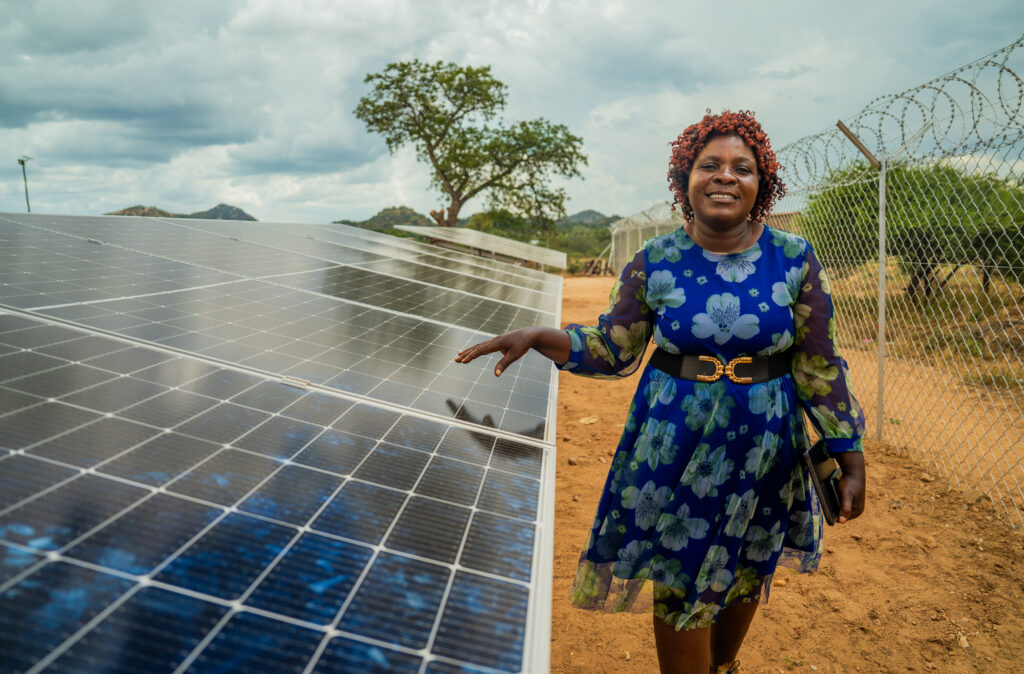
Growing evidence suggests that climate change and environmental degradation act as a catalyst, a driver and a multiplier of instability, exacerbating already volatile food prices, insecure livelihoods, and large-scale displacement. The EC climate change and security programme, managed by UNEP-CTCN, supports ten pilots in countries at risk of conflicts due to climate impact, prioritizing women and marginalized groups. In Cameroon, women’s cooperatives apply synecoculture for sustainable farming; in Zimbabwe, women use solar-powered drying systems for Mopane worms; and in Nigeria, women adopt hydroponic farming powered by solar energy, creating gender-responsive solutions for climate security.
Climate Impact
- Implemented climate technologies adapted to conflict-affected areas, reducing vulnerability to droughts, food insecurity, and resource competition.
- Supported solar, hydroponic, and ecological farming systems that cut emissions and reduce dependence on fossil fuels.
Gender Impact
- Improved access to resources, income, and green job opportunities for women and marginalized communities.
- Promoted community and women’s ownership of technologies, ensuring long-term sustainability and ecosystem restoration in high-risk regions.
Scalability/Replicability
- Community-driven approaches and local capacity building enable replication in other regions with similar environmental and social conditions once local actors are trained.
- Strengthened resilience in conflict-affected and high-risk regions by deploying conflict sensitive, community-based climate technologies.
read the latest from our network
We work across regions and movements in deep solidarity. Together, we’re building collective advocacy to global problems.

2025 Solutions Genre et Climat (10 Ans)
26/11/2025

Press Releases
News
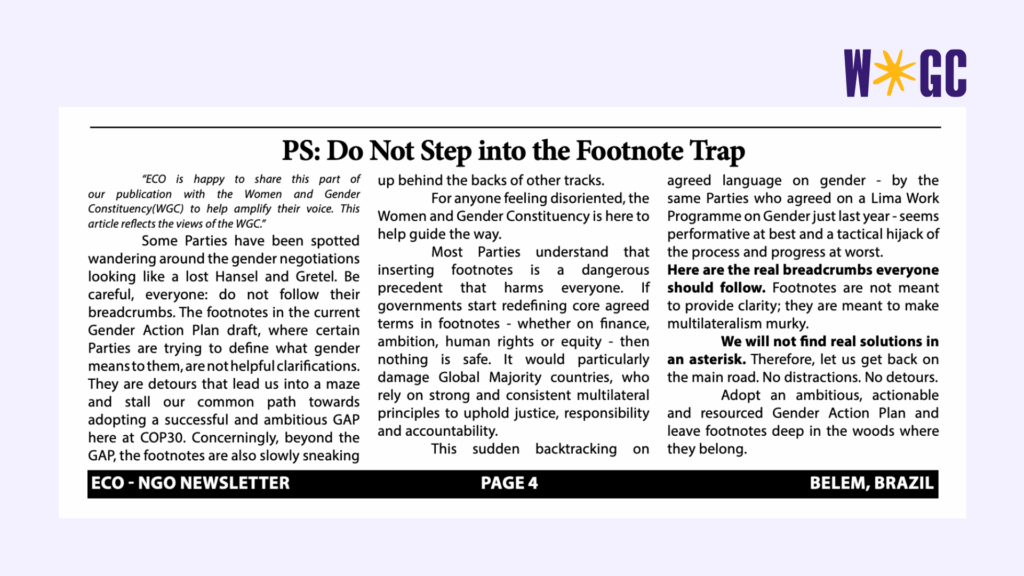
PS: Do Not Step into the Footnote Trap
19/11/2025

Annual Publications
Petition