
Back
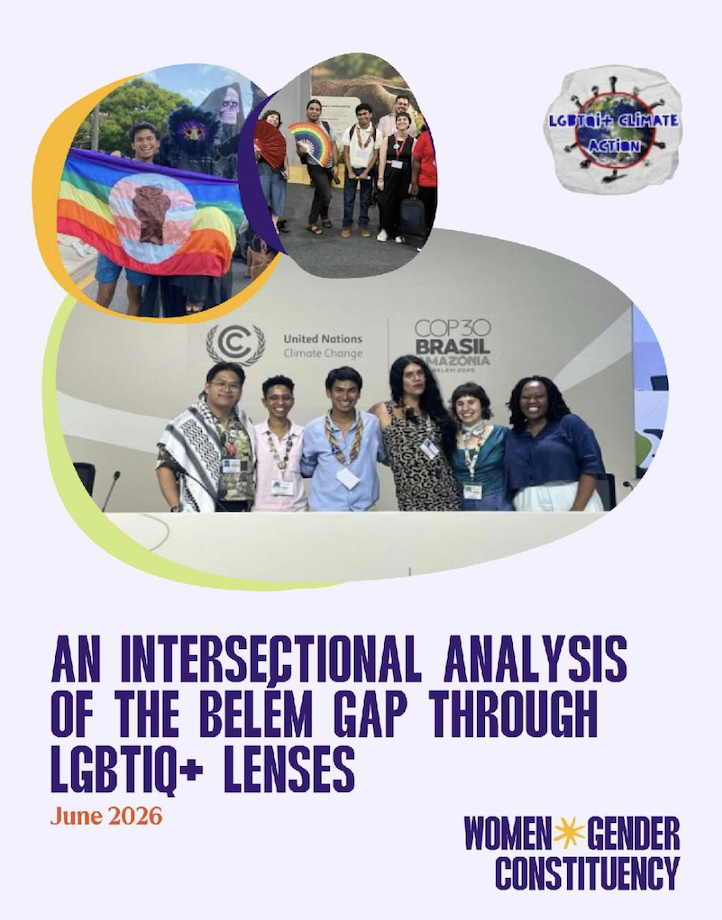
An Intersectional Analysis of the Belém Gender Action Plan through an LGBTIQ+ Lens
Related Resources
Press Releases
Press Release: Queer Intersectionality in Climate Justice
09/06/2026
Queer Intersectionalities Media Advisory SB64
The Belém Gender Action Plan, adopted at COP30, is a milestone for gender-responsive climate governance: a nine-year framework spanning capacity-building, participation, coherence, implementation, and monitoring. It is also a missed opportunity.
Our new paper examines the Belém GAP through an intersectional LGBTIQ+ lens, situating it within feminist climate justice scholarship, queer ecology, and a rapidly shifting international legal landscape.
The negotiations took place amid coordinated pushback against rights-based and gender-transformative language, from binary reframings of gender to unprecedented national footnotes on its definition. The result: “intersectionality” is absent from the final text, replaced by the vaguer language of “multidimensional factors”, which appears 11 times across the decision.
Yet the stakes are far from semantic. LGBTIQ+ communities face heightened climate vulnerability through housing insecurity, exclusion from disaster relief and warning systems, and barriers to healthcare and protection. At the same time, queer communities hold generations of expertise in mutual aid, chosen family, and collective survival: a vital and undervalued resource for climate adaptation.
International law is moving decisively. The 2025 advisory opinions of the ICJ and the Inter-American Court of Human Rights frame intersectionality, equity, and enhanced due diligence as binding dimensions of states’ climate obligations, with the IACtHR explicitly addressing the protection of LGBTIQ+ and gender-diverse persons. Promising national practice already exists, from Mexico’s NDC 3.0 to Bangladesh’s National Adaptation Plan.
The paper calls on Parties, the UNFCCC, and climate finance institutions to treat the GAP’s references to “multidimensional factors” as entry points, not endpoints: institutionalising intersectional analysis, adopting SOGIESC-disaggregated data standards, and aligning implementation with emerging legal obligations.
Because who is counted, consulted, and protected in climate policy is never neutral. Read the full paper here.
Related Resources
Press Releases
Press Release: Queer Intersectionality in Climate Justice
09/06/2026
Queer Intersectionalities Media Advisory SB64