Strengthening Women’s Leadership In Conservation and Sustainable Livelihoods in the Cerrado, Brazil
About
In the heart of Cerrado, one of the most threatened ecosystems in Brazil, rural women are leading the way in ecological restoration and climate justice. Caminhos da Onça (“Paths of the Jaguar”) restores degraded areas, creating ecological corridors for flagship species like the jaguar, and other vulnerable species such as the giant anteater and maned wolf, while strengthening women’s leadership in conservation and community based ecotourism. Women conduct interpretive trails, manage nurseries, monitor fauna, and lead environmental education for schools and visitors. By connecting traditional knowledge with ecological science and fostering gender-responsive territorial governance, the project protects threatened ecosystems and species.
Climate Impact
- Reforestation with native species increases vegetation cover, restoring soil health and water sources. Three hectares have been restored, estimating the capture of up to 18 tonnes of CO2 per year.
- Restoration of ecological corridors improves habitat connectivity for endangered species like the jaguar, enhancing ecosystem resilience in the face of global warming.
- Planting climate-adapted species strengthens food security, reduces soil erosion, and secures water availability for communities facing droughts and rising temperatures.
Gender Impact
- Women earn economic autonomy from nursery management, ecotourism services, and environmental facilitation, reducing dependence on unsustainable extractive practices.
- Women take on public leadership roles, participate in decision making spaces, and advocate for territorial and women’s rights
- Activities are designed around women’s care responsibilities, while also engaging youth and valuing diverse identities, including Indigenous, Afro-descendant, and LGBTQIA+ participants.
Scalability/Replicability
- The community-based ecotourism model offers alternatives to decent work, championing the care economy, cultural appreciation, effective and sufficient financial support, and fair distribution of benefits.
- Collective decision-making and participatory planning ensure deep local ownership and long-term sustainability.
- By simultaneously addressing biodiversity loss, income generation, women’s political empowerment, and climate resilience, the initiative offers a holistic framework for just transitions.
read the latest from our network
We work across regions and movements in deep solidarity. Together, we’re building collective advocacy to global problems.
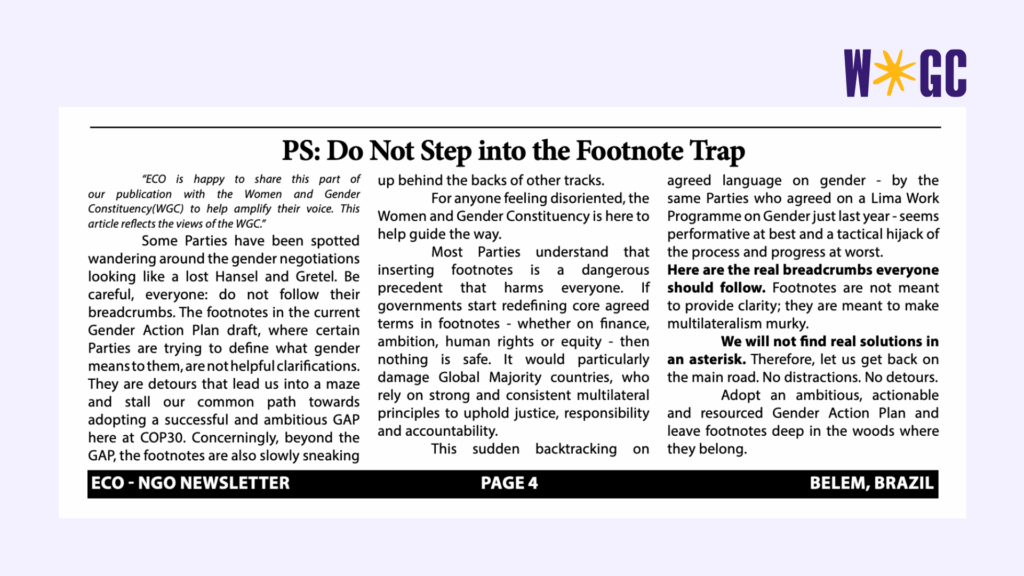
PS: Do Not Step into the Footnote Trap
19/11/2025
Gender Just Climate Action requires truth
12/11/2025
Nov 11 Action Alert: Gender Justice Day
10/11/2025