
Back
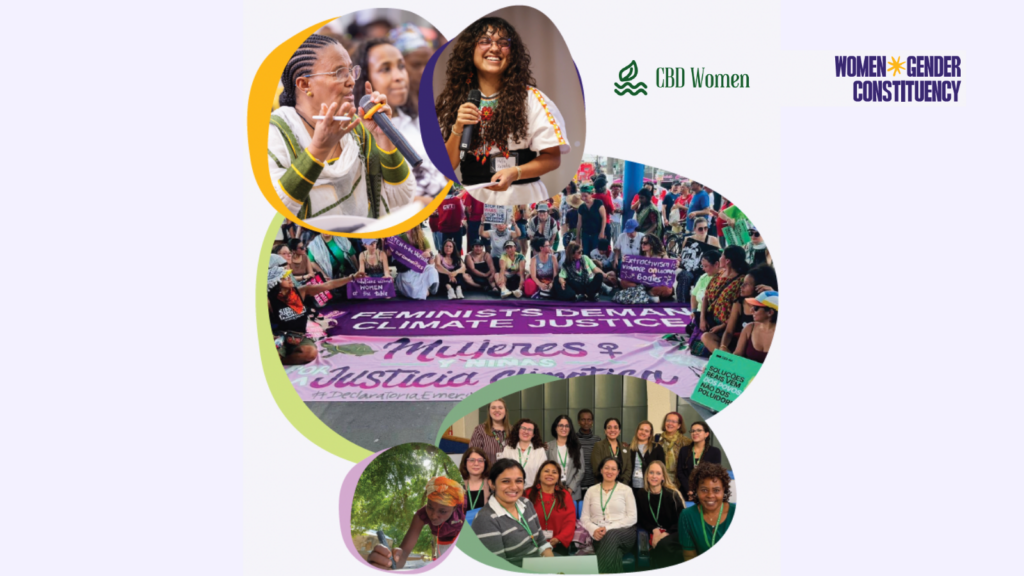
UNFCCC Gender Action Plan & CBD Gender Plan of Action: Synergies for implementation at national level
Related Resources
Statement
The Rio Conventions — the United Nations Framework Convention on Climate Change (UNFCCC), the Convention on Biological Diversity (CBD), and the United Nations Convention to Combat Desertification (UNCCD) — were adopted at the 1992 Earth Summit to address climate change, biodiversity loss, and land degradation. While these agendas are inherently interconnected, their implementation has historically evolved in parallel, often through separate institutional, policy and funding processes. In recent years, Parties and institutions have increasingly recognised the need to strengthen synergies across the Conventions, resulting in joint initiatives, shared approaches and growing efforts toward coordinated implementation.
At the same time, there is growing recognition that there is an inextricable link between environmental and gender justice, and no action to address the former will be complete without an effective gender lens, including an intersectional approach. In this context, the CBD’s Gender Plan of Action (GPA) and the UNFCCC’s Gender Action Plan (GAP) provide structured frameworks to advance gender justice and women’s rights in the implementation within each Convention.
However, despite the existence of these frameworks, implementation at national level remains fragmented, often under-resourced, and insufficiently coordinated across sectors and institutions. This limits the ability of countries to fully realise both gender equality and environmental objectives, particularly given the interlinked causes of climate change and biodiversity loss.
Recognising this implementation gap, the CBD Women’s Caucus and the Women and Gender Constituency under the UNFCCC have come together to support more coherent and coordinated implementation of the two Gender Action Plans. This collaboration reflects the practical reality that, at national level, both Plans are often implemented by the same institutions and actors, and aims to facilitate alignment between them in support of coordinated implementation by governments and women’s organisations.
Key Messages
- Implementation of the Gender Action Plans remains fragmented, underresourced, and poorly coordinated across sectors and institutions.
- Aligning climate and biodiversity frameworks at national level offers a concrete pathway to strengthen impact, efficiency, and genderresponsive outcomes.
- Women’s organisations are key implementation actors and must be recognised, resourced, and engaged as strategic partners.
- Effective implementation requires coordination across ministries, focal points, and planning instruments (e.g. NDCs, NBSAPs, NAPs, LNDs).
- Ambition must be matched with financing, data, and accountability systems to translate commitments into real change.
Related Resources
Statement