Innovative financing technology boosting gender just energy transition in Nigeria

Rural Women Energy Security Ltd/Gte (RUWES)
WGC Member Solution
Description of the project:
Household cooking sector is the largest consumer of energy in Nigeria, with 80–90% of them using biomass, particularly fuel wood. This causes GHG emissions and air pollution. In a bid to mitigate this, RUWES in partnership with Nexleaf Analytics, identified clean and affordable cookstoves to close the gap in this sector. Women energy entrepreneurs were trained to use innovative technologies and financing schemes. This ‘Sensor-enabled Climate Financing (SCF) Project’ introduced the use of new scalable mechanisms to fund and deploy clean cookstoves in rural communities.
Climate impact
- Black Carbon (BC) reductions in up to 100 households
reaching up to 345 tons of CO2 eq. emission reduction for the BC component. - Reducing indoor air pollution for households,
- Strengthened skilled technicians and entrepreneurs
in the renewable energy sector.
Gender impact
- Capacity building of rural women on energy technologies, entrepreneurial skills and financing mechanisms.
- Sustainable income generation for women via
energy-related services. - Improved women’s participation in decision-making
about energy.
Scalability / replicability
- Reduction of upfront costs, through microfinancing options to ease burden of payment by low-income women.
- Train-of-Trainers allowing beneficiaries to take ownership of the program.
- Development of an “energy entrepreneur kit” to sell,
install, evaluate equipment and provide after-sales service
to cookstove end users.
read the latest from our network
We work across regions and movements in deep solidarity. Together, we’re building collective advocacy to global problems.

Press Releases
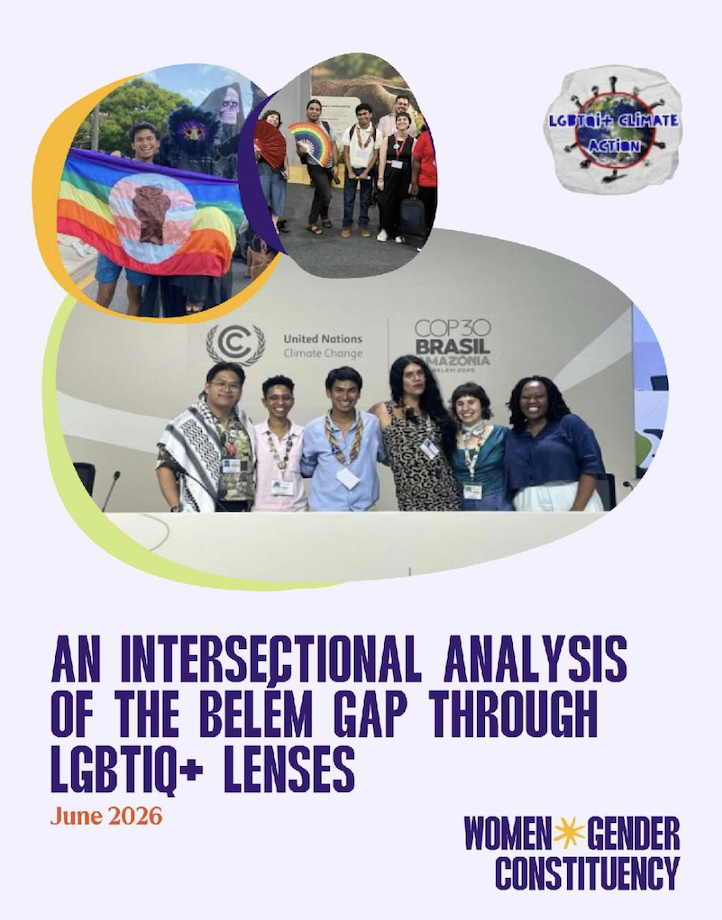
Press Release: Queer Intersectionality in Climate Justice
09/06/2026
Queer Intersectionalities Media Advisory SB64
Statement
Events
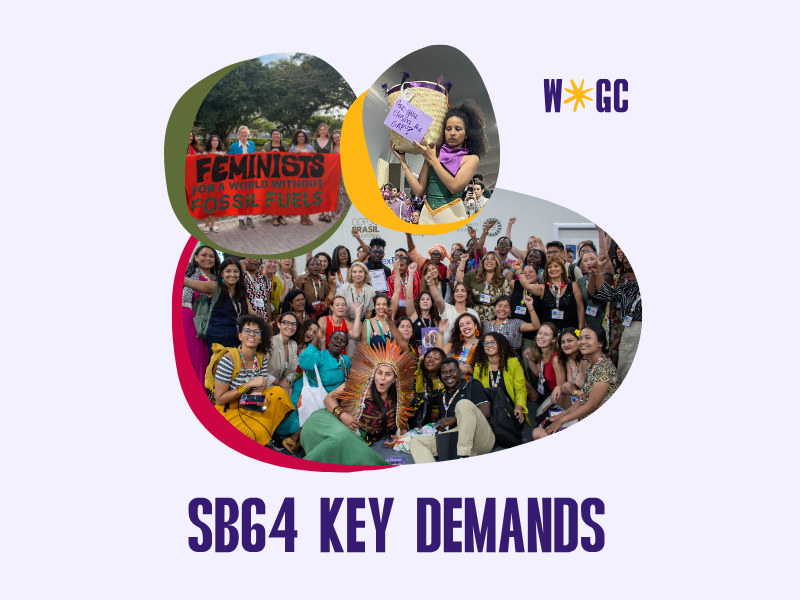
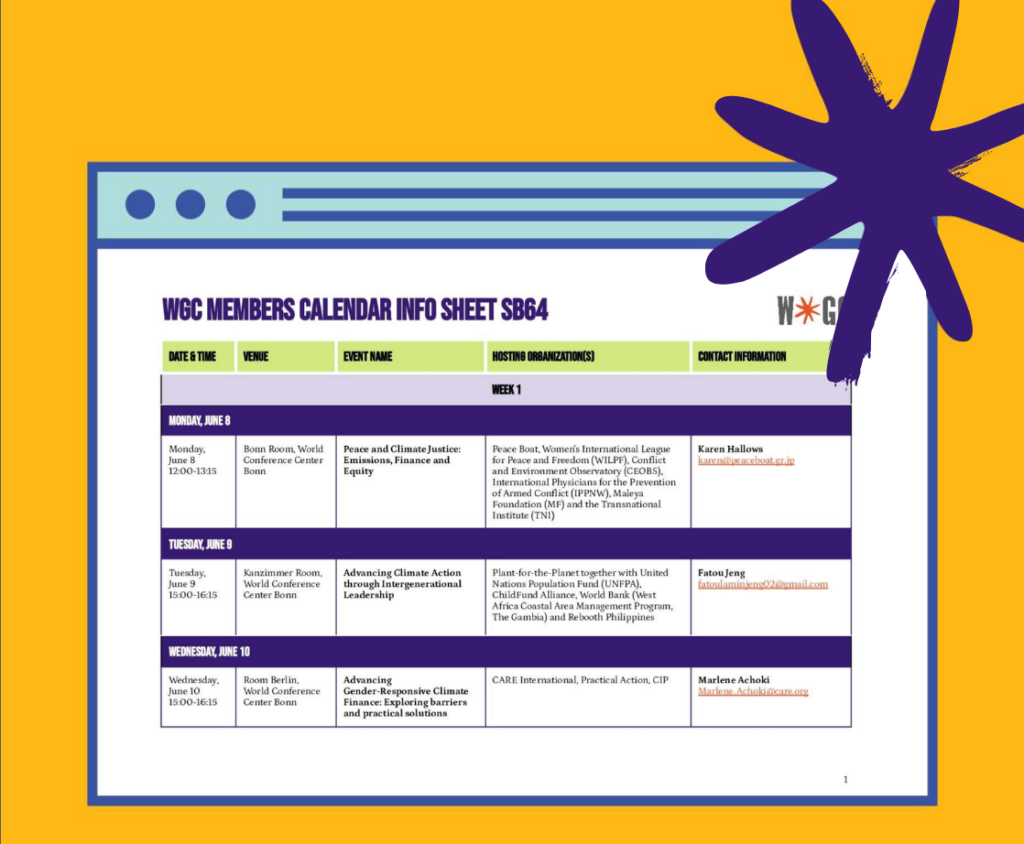
WGC Members Side Event Schedule for SB64
03/06/2026
Advocacy Brief
Statement
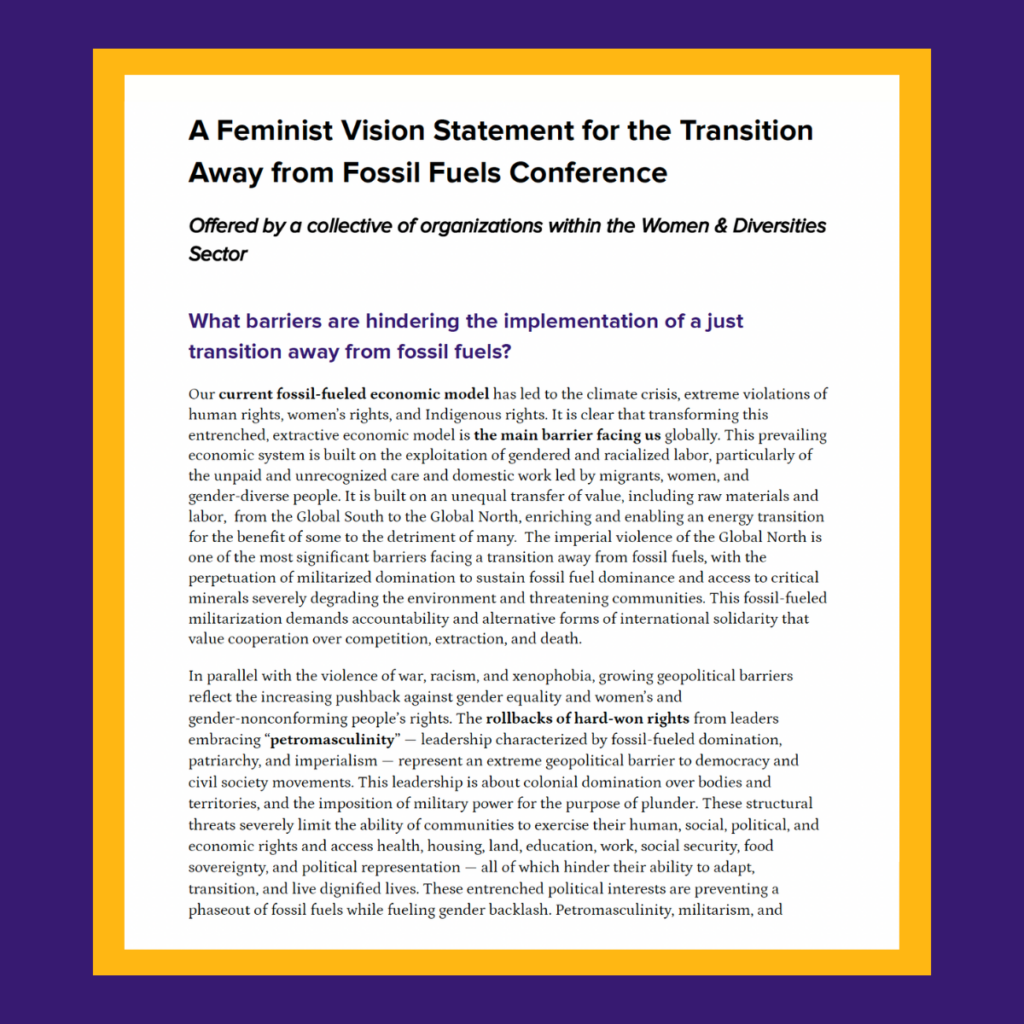
A Feminist Vision Statement for the Transition Away from Fossil Fuels Conference
24/04/2026
Offered by a collective of organizations within the Women & Diversities Sector
Events
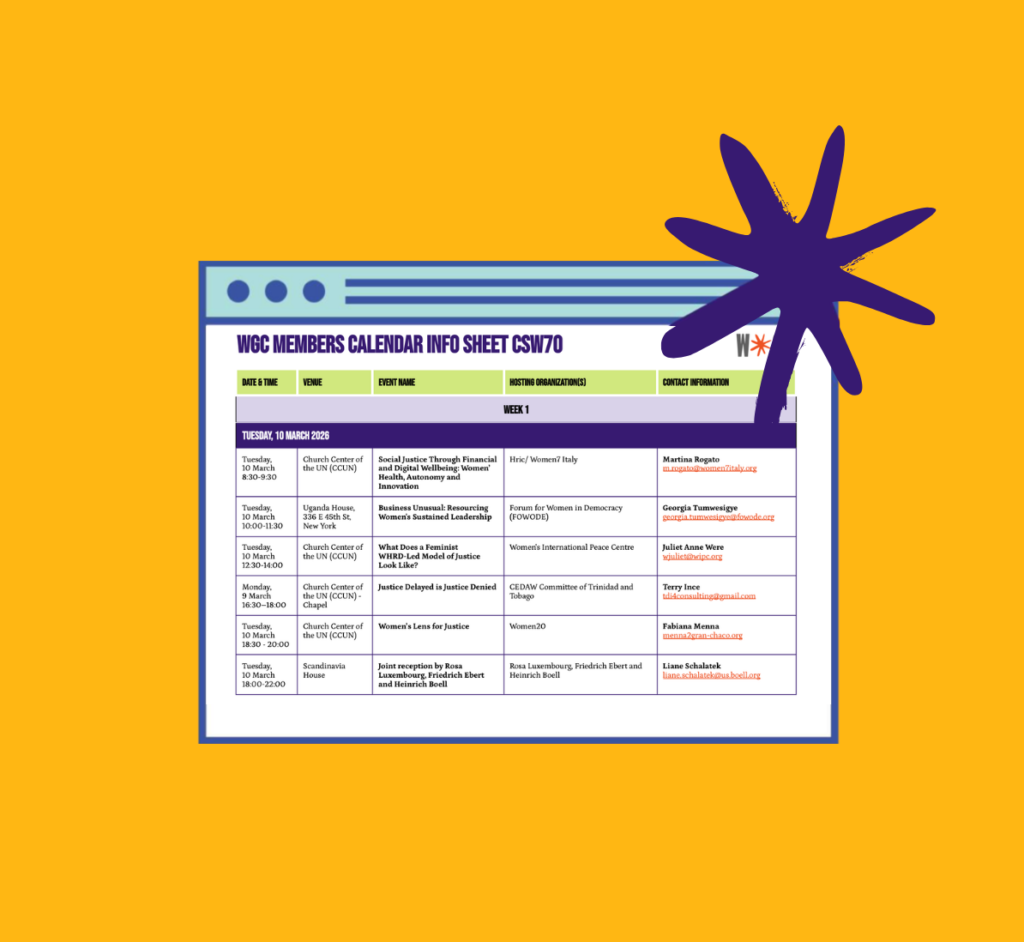
WGC Members Side Event Schedule for CSW70
09/03/2026